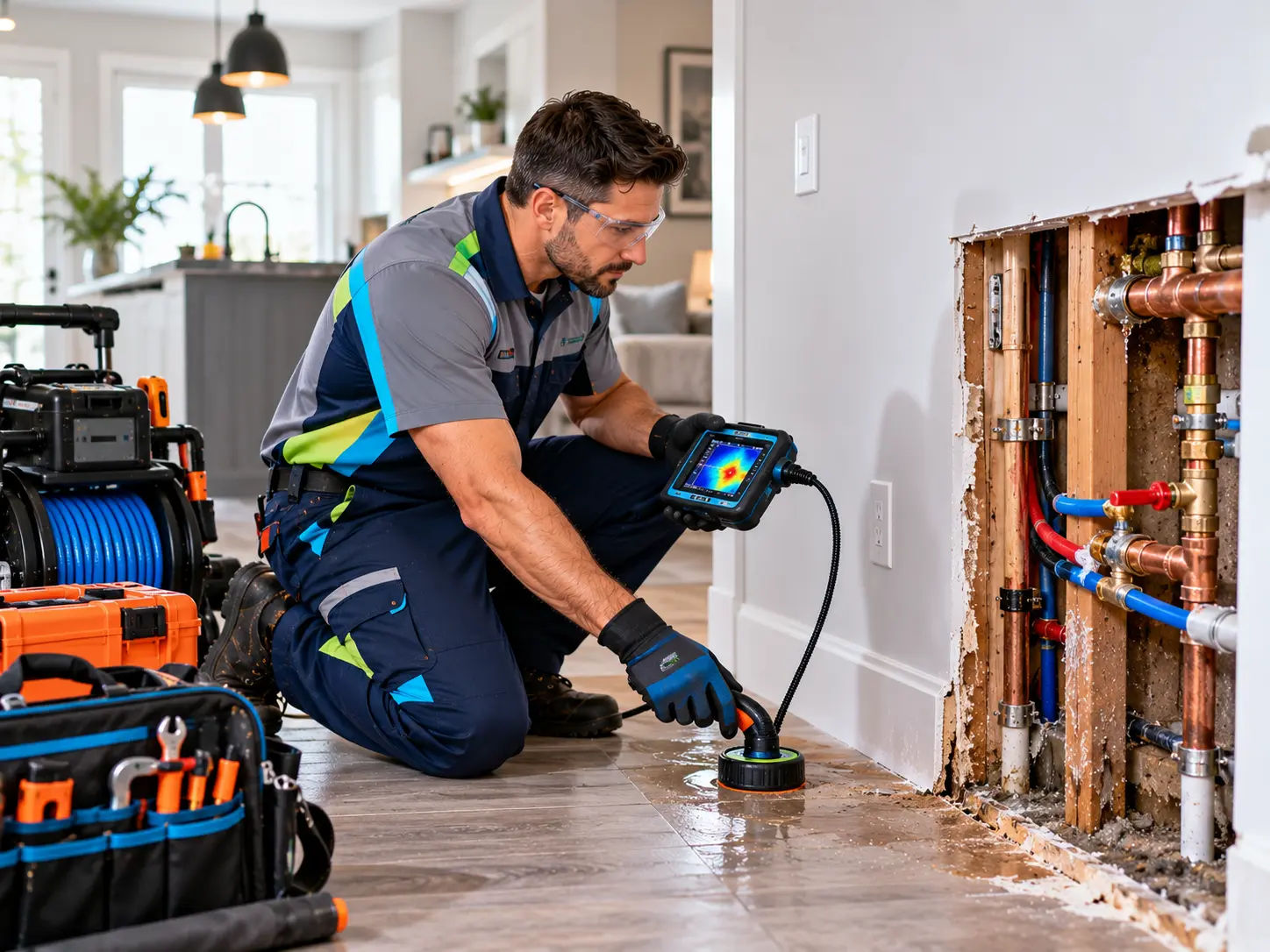
Detecting leaks in pipes running beneath concrete foundations often starts with subtle signs like persistent dampness along baseboards or floors that never fully dry in Dallas, TX. These issues typically stem from aging supply lines or shifting ground that stresses joints under the slab. Property owners notice the problem when water usage spikes without visible explanation.
Slab Leak Detection Challenges in Dallas, TX
Soil movement common around Dallas, TX can place stress on buried copper or PEX lines, creating pinhole leaks that go unnoticed for months. Technicians evaluate foundation type and pipe material first because these factors determine which detection tools will reach the affected section without unnecessary concrete removal. Local construction practices in Dallas, TX frequently place supply lines directly in or under the slab, increasing the chance that minor ground settling leads to leaks.
- Acoustic sensors pick up the sound of water escaping under pressure.
- Thermal cameras reveal temperature differences where moisture cools surrounding concrete.
- Pressure testing isolates sections of the line to confirm loss without excavation.
Common Causes of Slab Leaks
Corrosion from minerals in the water supply gradually weakens pipe walls until small holes form. Tree roots seeking moisture can exert enough force to crack joints in older installations. Poor initial installation, such as inadequate sleeving where pipes enter the slab, leaves lines vulnerable to abrasion during settling.
Homeowners in Dallas, TX sometimes discover these leaks only after noticing warm spots on tile floors during winter months. The same conditions that affect general home water line and plumbing pipe leak detection with repair apply here, yet the concrete barrier adds complexity because access requires precise location data before any repair begins.
How Professionals Locate Leaks Under Concrete
Technicians begin by mapping the approximate route of supply lines using original plumbing plans when available. They then introduce pressurized air or water while listening with ground microphones at multiple points across the slab. When sound alone proves inconclusive, a tracer gas mixture travels through the line and surfaces at the leak point for electronic detection.
This approach prevents random jackhammering that could damage structural elements. In Dallas, TX, technicians also account for radiant heating loops that sometimes run alongside domestic water lines, because those systems change the thermal signature technicians must interpret.
When Slab Leak Detection Becomes Necessary
Sudden drops in water pressure combined with no visible leaks inside walls or ceilings usually indicate the problem lies beneath the foundation. Musty odors near exterior walls or efflorescence on concrete surfaces provide additional clues. Property owners who have already ruled out toilet and faucet leaks through isolation tests often schedule slab leak detection next.
The process differs from standard home water line and plumbing pipe leak detection with repair because the slab itself must remain intact during diagnosis. Once located, repair decisions depend on whether the line can be rerouted externally or requires sectional replacement through a targeted opening.
Equipment Used During Slab Leak Detection
Electronic leak correlators compare sound arrival times at two points to calculate distance to the breach. Helium sniffers detect the lightest tracer gas after it escapes the pipe and migrates upward through the slab. Video inspection crawlers enter cleanouts when accessible and travel toward the suspected area to confirm visual evidence of damage.
Each tool provides data that narrows the search area before any concrete cutting occurs. Technicians in Dallas, TX carry multiple devices because soil density and slab thickness vary between neighborhoods and older versus newer construction.
Repair Considerations After Detection
Once the exact leak position is marked, options include epoxy lining for small pinholes or full pipe rerouting along exterior walls to avoid further slab penetration. In some cases, the existing line is abandoned and a new supply is installed in an accessible trench outside the foundation. The choice depends on pipe material, leak severity, and whether multiple leaks appear along the same run.
Local Relevance of Slab Leak Detection in Dallas, TX
Properties in Dallas, TX often sit on expansive clay soils that expand and contract with seasonal moisture changes, stressing under-slab plumbing more than stable sandy soils do. This environmental factor means detection appointments frequently occur after heavy rain periods when ground movement peaks. Service teams familiar with Dallas, TX understand which subdivisions share similar pipe layouts and can reference those patterns during initial assessments.
Preparing for a Slab Leak Detection Visit
Clear access to the main water shutoff and any cleanouts before the technician arrives. Note recent water bill amounts and any locations where moisture appears most consistently. Provide details about recent remodeling that may have altered pipe routes.
Safety Considerations During Detection
Technicians verify electrical grounding before introducing electronic equipment near wet surfaces. They also isolate the water heater and any recirculation pumps to prevent false readings from normal system operation. Homeowners should avoid attempting to locate leaks themselves with consumer-grade tools because inaccurate readings can lead to unnecessary demolition.
Maintenance After Slab Leak Detection and Repair
Once repairs finish, periodic pressure checks on accessible valves help confirm the system remains sound. Monitoring water meter readings with all fixtures off provides an early warning if new leaks develop elsewhere. In Dallas, TX, annual checks become especially useful after periods of drought followed by heavy rain, when soil movement resumes.
Discuss your slab leak detection requirements in Dallas, TX by calling (888) 523-1876.
Schedule a targeted assessment for hidden foundation leaks by contacting the team at (888) 523-1876.
FAQ
How does slab leak detection differ from standard plumbing inspections in Dallas, TX?
Specialized equipment must penetrate the concrete barrier acoustically or thermally rather than visually inspecting exposed pipes.
What soil conditions in Dallas, TX increase the likelihood of slab leaks?
Expansive clays common throughout Dallas, TX shift with moisture changes and place repeated stress on buried supply lines.
Can slab leak detection identify issues before major water damage occurs?
Yes, early pressure loss and acoustic testing often locate small leaks before they saturate insulation or subfloor materials.
Does every slab leak require concrete removal in Dallas, TX?
Many leaks allow external rerouting or trenchless lining, reducing the need for interior demolition.
How soon after detection should repairs begin?
Most technicians recommend addressing confirmed leaks within days to limit further foundation movement and mold risk.
[End of Article]